Loading comparison
DS N°8 vs Hyundai IONIQ 5
Selected trimFWDChange trim341 mi · 74 kWh · £50,790
Selected trimStandard Range RWDChange trim273 mi · 63 kWh · £40,695
At a glance
In this comparison, DS N°8 leads on running costs, while the Hyundai IONIQ 5 leads on value for money, charging speed and city driving.
Which should you choose?
Choose the DS N°8 if...
- you want the lowest running costs - from just 1.8p per mile on off-peak electricity
Choose the Hyundai IONIQ 5 if...
- you want the most for your money - best overall spec per pound
- you need the fastest charging of these options
- you need the best car for city driving and tight parking
How we reached the recommendation
Verdict
Our take
The Hyundai IONIQ 5 leads in the most categories, but each car here has its strengths.
ValueHyundai
DS
5.4
Hyundai
6.1
Motorway Range
DS
6.8
Hyundai
6.4
Too close to call
Family
DS
7.8
Hyundai
7.7
Too close to call
ChargingHyundai
DS
5.7
Hyundai
7.9
Cost Per MileDS
DS
8.4
Hyundai
6.8
City DrivingHyundai
DS
2.6
Hyundai
3.3
What each car does better
See the specification differences behind the verdict, with supporting figures for each advantage.
Hyundai IONIQ 5
Standard Range RWD
- £10,095 cheaper
- 100 kW faster rapid charging
- 9 min quicker 10-80% rapid charge
Key specifications
Compare the key specifications for your selected trims.
| Measure | DS N°8FWD | Hyundai IONIQ 5Standard Range RWD |
|---|---|---|
| Price | £50,790 | £40,695 (better) |
| Official range | 341 miles (better) | 273 miles |
| Boot space | 560 L (better) | 520 L |
| 10-80% rapid charge | 27 min | 18 min (better) |
| 0-62 mph | 7.7 sec (better) | 8.5 sec |
Size Comparison
View:
Align by:
DS N°8
Hyundai IONIQ 5
Length
DS N°84,810mm
Hyundai IONIQ 54,655mm-155mm
Width
DS N°81,905mm
Hyundai IONIQ 51,890mm-15mm
Height
DS N°81,580mm-25mm
Hyundai IONIQ 51,605mm
Space, size & parking
Parking & manoeuvring
Compare exterior dimensions to assess how each car fits UK parking spaces.
| Measure | DS N°8FWD | Hyundai IONIQ 5Standard Range RWD |
|---|---|---|
| Length | 4,810 mm | 4,655 mm |
| Width (mirrors folded) | 1,905 mm | 1,890 mm (better) |
| Width with mirrors out | Not available | 2,116 mm |
| Height | 1,580 mm | 1,605 mm |
| Turning circle | Not available | 12 m |
| Clearance in a standard bayA standard UK parking bay is 2,400 mm wide. | 495 mm spare | 510 mm spare (better) |
People & luggage
Compare seating, child-seat mounting points, boot space and towing capacity.
| Measure | DS N°8FWD | Hyundai IONIQ 5Standard Range RWD |
|---|---|---|
| Seats | 5 | 5 |
| Boot space (seats up) | 560 L (better) | 520 L |
| Boot space (seats down) | Not available | 1587 L |
| Frunk | Not available | 57 L |
| Towing capacity (braked) | Not available | 750 kg |
How each stacks up
Percentile ranks against UK EVs of the same body style.
DS N°8
Not enough peers to make confident percentile claims.
Hyundai IONIQ 5
- Peak DC charging of 260 kW, faster than 85% of SUVs in our catalogue.
- One of 33 of 232 UK EVs in our catalogue with V2L (vehicle-to-load) support.
- 3,000 mm wheelbase, longer than 90% of SUVs we track.
Full specifications
| Specification |  DS N°8 FWD |  Hyundai IONIQ 5 Standard Range RWD |
|---|---|---|
| Dimensions | ||
| Length | 4.81m | 4.66m-155mm |
| Width | 1.91m | 1.89m-15mm |
| Width (mirrors) | Not available | 2.12m |
| Height | 1.58m | 1.60m+25mm |
| Wheelbase | 2.90m | 3.00m+100mm |
| Capacity | ||
| Boot (seats up) | 560L (better) | 520L |
| Boot (seats down) | Not available | 1587L |
| Frunk | Not available | 57L |
| Seats | 5 | 5 |
| Practicality | ||
| Turning Circle | Not available | 12m |
| Kerb Weight | 2,080kg | 1,920kg (better) |
| Towing Capacity | Not available | 750kg |
| Electric | ||
| Battery | 74kWh (better) | 63kWh |
| Range (WLTP) | 341 mi (better) | 273 mi |
| Max DC Charge | 160kW | 260kW (better) |
| Pricing | ||
| UK MSRP | £50,790 | £40,695 (better) |
| Details | ||
| Body Style | SUV | SUV |
| Available | 2025+ | 2024+ |
Range & charging
Range, charging & battery
Check official and estimated driving range alongside charging speeds, efficiency and battery technology.
| Measure | DS N°8FWD | Hyundai IONIQ 5Standard Range RWD |
|---|---|---|
| Official range (WLTP) | 341 miles (better) | 273 miles |
| Estimated motorway rangeEVcarsguide estimate at sustained motorway speed. | 285 miles (better) | 228 miles |
| 10-80% rapid charge time | 27 min | 18 min (better) |
| Max rapid charge rate | 160 kW | 260 kW (better) |
| Home AC charging | 11 kW (better) | 10.5 kW |
| Usable battery capacity | 74 kWh (better) | 63 kWh |
| Battery chemistry | NMC | NCMA |
| Battery architecture | 400V | 800V (better) |
| Heat pump | Not available | Standard |
Driving & everyday use
Performance & drivetrain
Compare acceleration, power and drivetrain specifications for the selected trims.
| Measure | DS N°8FWD | Hyundai IONIQ 5Standard Range RWD |
|---|---|---|
| 0-62 mph | 7.7 sec (better) | 8.5 sec |
| Power | 169 kW (better) | 125 kW |
| Torque | 345 Nm | 350 Nm (better) |
| Drivetrain | FWD | RWD |
What the critics say
See how UK motoring publications rate each car in their road tests. One car has more review coverage than the other - we show that rather than guessing.

DS N°8
FWD
No critic reviews gathered yet for this car.

Hyundai IONIQ 5
Standard Range RWD
8.9/10
average across 7 reviews
- DrivingElectric5/5
- Car Magazine5/5
- Auto Express4.5/5
Watch the reviews
Watch selected video reviews here, or visit each model page for the full collection.
DS N°8
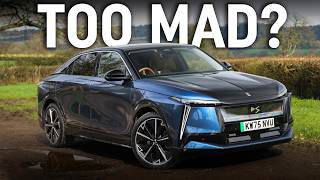
All 3 videos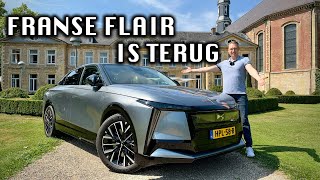
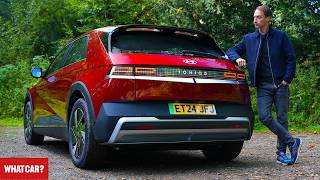

Reviews and videos discuss each model overall; the specifications above apply to your selected trims.
Prices & deals
Calculate your real costs
For a useful running-cost comparison, factor in your mileage, charging access and current petrol or diesel car alongside the EV estimate.
Compare with petrol or diesel
Compare purchase price, energy, road tax and maintenance with a petrol or diesel alternative.
Calculate company-car tax
Work out monthly Benefit-in-Kind using current and future HMRC rates.
Cost per mile
Compare EV charging costs per mile with petrol and diesel using your charging options.
Check a lease quote
Assess the effective monthly cost alongside the list price and expected depreciation.
Safety & ownership confidence
Euro NCAP - DS N°8 FWD
Tested 2025
Adult Occupant76%
Child Occupant85%
Vulnerable Road Users80%
Safety Assist65%
Full result on euroncap.com (opens in new tab)
Euro NCAP - Hyundai IONIQ 5 Standard Range RWD
Vulnerable Road Users63%
Full result on euroncap.com (opens in new tab)
Buying options
Get a quote
DS N°8
Used on AutoTraderLease deals
Hyundai IONIQ 5
Used on AutoTraderLease deals
Live used listings
Active inventory from independent UK dealers.
DS N°8
No active listings.
Hyundai IONIQ 5
- £29,9902025Cars2View
- £40,4902026Cars2View
- £33,9902026Cars2View
Frequently asked questions
Is the DS N°8 worth the extra £10,095 over the Hyundai IONIQ 5?
The DS N°8 costs £10,095 more than the Hyundai IONIQ 5. For that premium it adds 68 miles more WLTP range and 44 kW more power. The Hyundai IONIQ 5 is not just cheaper - it also offers 100 kW faster peak rapid charging. On EVcarsguide's combined category scores, the Hyundai IONIQ 5 comes out ahead overall.
Which is cheaper to own over 5 years, the DS N°8 or the Hyundai IONIQ 5?
The Hyundai IONIQ 5 is £10,095 cheaper to buy. Running costs are almost identical - about £144 a year either way, at 8,000 miles on an off-peak home tariff. Add 5 years of charging and the Hyundai IONIQ 5 comes out roughly £10,015 cheaper overall. These figures cover list price and home charging only - insurance, servicing, tyres and depreciation will move the real total.
What are the DS N°8 and Hyundai IONIQ 5 like on a long motorway trip?
EVcarsguide estimates a real-world motorway range of about 285 miles for the DS N°8 and 228 miles for the Hyundai IONIQ 5 - both below their WLTP figures, because sustained high speed is the hardest case for an EV. The DS N°8 goes roughly 57 miles further between charging stops. A rapid charge to 80% takes around 27 minutes in the DS N°8 and 18 in the Hyundai IONIQ 5, so the Hyundai IONIQ 5 loses less time at each stop. So the DS N°8 stops less often while the Hyundai IONIQ 5 stops for less time - pick on which you would rather do.
Which is easier to park and drive in town, the DS N°8 or the Hyundai IONIQ 5?
The two are within 15 mm on width, so neither is meaningfully easier to thread into a tight space. In a standard 2,400 mm bay that leaves about 510 mm of total clearance for the Hyundai IONIQ 5 and about 495 mm of total clearance for the DS N°8.
Which battery will hold up better as a used buy, the DS N°8 or the Hyundai IONIQ 5?
Over a 8-year ownership window EVcarsguide's degradation model projects roughly 84% battery health for the DS N°8 and 89% for the Hyundai IONIQ 5. That gives the Hyundai IONIQ 5 a modest edge in retained real-world range. Both use NMC-type cells, so for daily use keep the charge limit near 80% to slow degradation.
Go deeper on each car
Visit the full model pages for owner feedback, expert reviews, used prices and battery-health information.
Compare against other rivals
Compare similarly sized and priced electric cars before finalising your shortlist.
More DS N°8 comparisons
More Hyundai IONIQ 5 comparisons
See both cars in our rankings
EVcarsguide scores every verified EV on price, range, family use and running costs. Here is where this pair appears.
Where the DS N°8 and Hyundai IONIQ 5 rank among the best family EVsWhere the DS N°8 and Hyundai IONIQ 5 rank among the best electric SUVsWhere the DS N°8 and Hyundai IONIQ 5 rank among the best motorway EVsWhere the DS N°8 and Hyundai IONIQ 5 rank among the best city EVsWhere the DS N°8 and Hyundai IONIQ 5 rank among the cheapest EVs to runWhere the DS N°8 and Hyundai IONIQ 5 rank among EVs with the biggest boots
If neither is quite right
Explore other verified electric cars that may better suit the priorities this pair does not meet.
Data accuracy
Specs are sourced from manufacturer websites and manually reviewed. These figures were last verified .